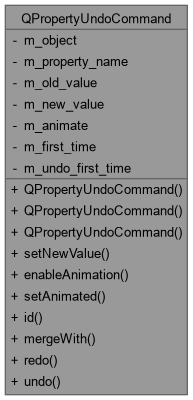
The QPropertyUndoCommand class This undo command manage QProperty of a QObject. This undo command can use QPropertyAnimation to animate the change when undo/redo is call To use animation call setAnimated(true). By default animation is disable. Some QVariant date can't be animated and result this command don't work.
More...
#include <qpropertyundocommand.h>
Inherits QUndoCommand.
The QPropertyUndoCommand class This undo command manage QProperty of a QObject. This undo command can use QPropertyAnimation to animate the change when undo/redo is call To use animation call setAnimated(true). By default animation is disable. Some QVariant date can't be animated and result this command don't work.
◆ QPropertyUndoCommand() [1/3]
| QPropertyUndoCommand::QPropertyUndoCommand |
( |
QObject * | object, |
|
|
const char * | property_name, |
|
|
const QVariant & | old_value, |
|
|
const QVariant & | new_value, |
|
|
QUndoCommand * | parent = nullptr ) |
◆ QPropertyUndoCommand() [2/3]
| QPropertyUndoCommand::QPropertyUndoCommand |
( |
QObject * | object, |
|
|
const char * | property_name, |
|
|
const QVariant & | old_value, |
|
|
QUndoCommand * | parent = nullptr ) |
QPropertyUndoCommand::QPropertyUndoCommand Default constructor with old value. Call setNewValue to setup the new value of the edited QObject This command don't take ownership of object.
- Parameters
-
| object | |
| property_name | |
| old_value | |
| parent | |
◆ QPropertyUndoCommand() [3/3]
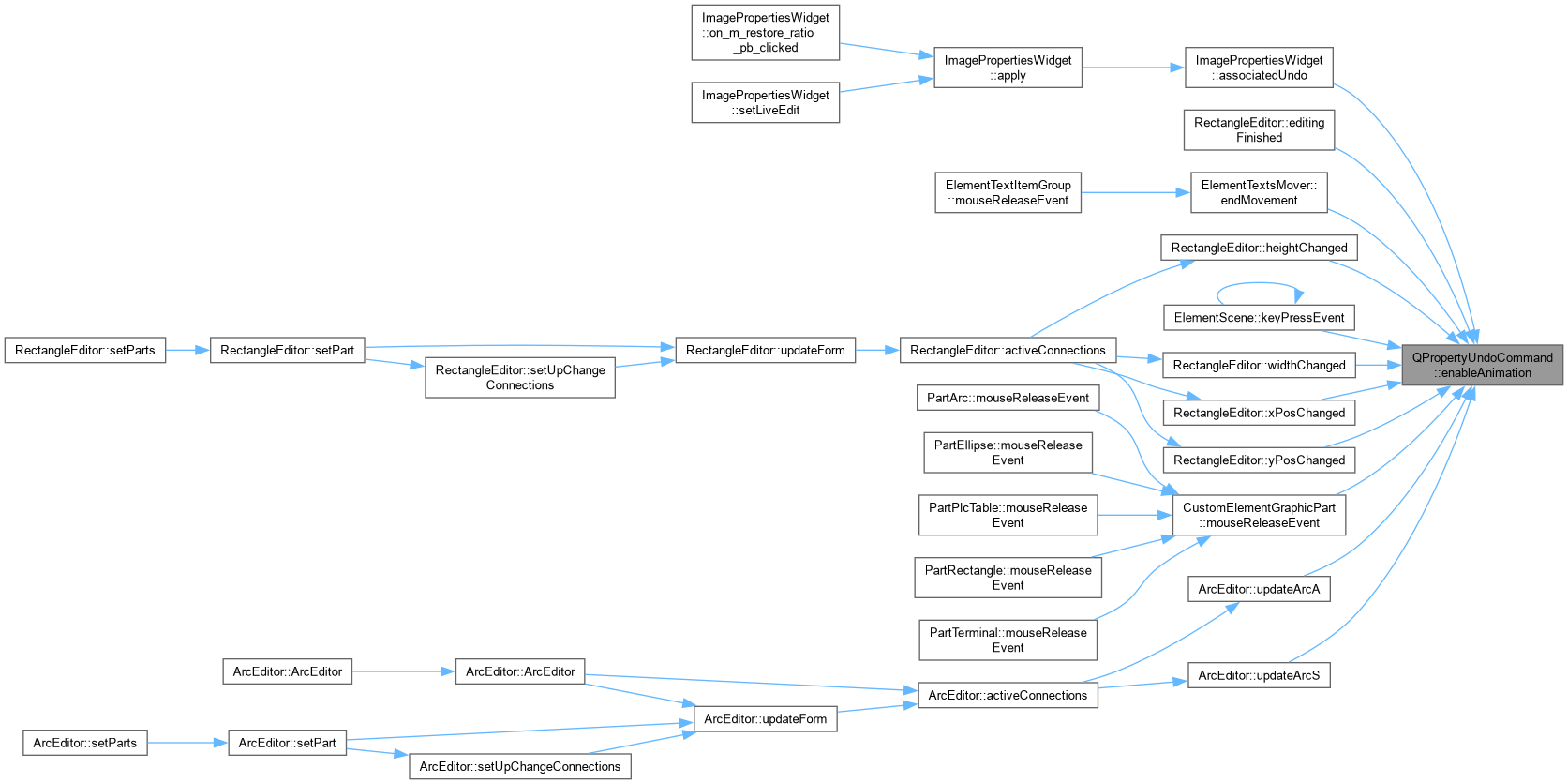
◆ enableAnimation()
| void QPropertyUndoCommand::enableAnimation |
( |
bool | animate = true | ) |
|
◆ id()
| int QPropertyUndoCommand::id |
( |
| ) |
const |
|
inlineoverride |
◆ mergeWith()
| bool QPropertyUndoCommand::mergeWith |
( |
const QUndoCommand * | other | ) |
|
|
override |
◆ redo()
| void QPropertyUndoCommand::redo |
( |
| ) |
|
|
override |
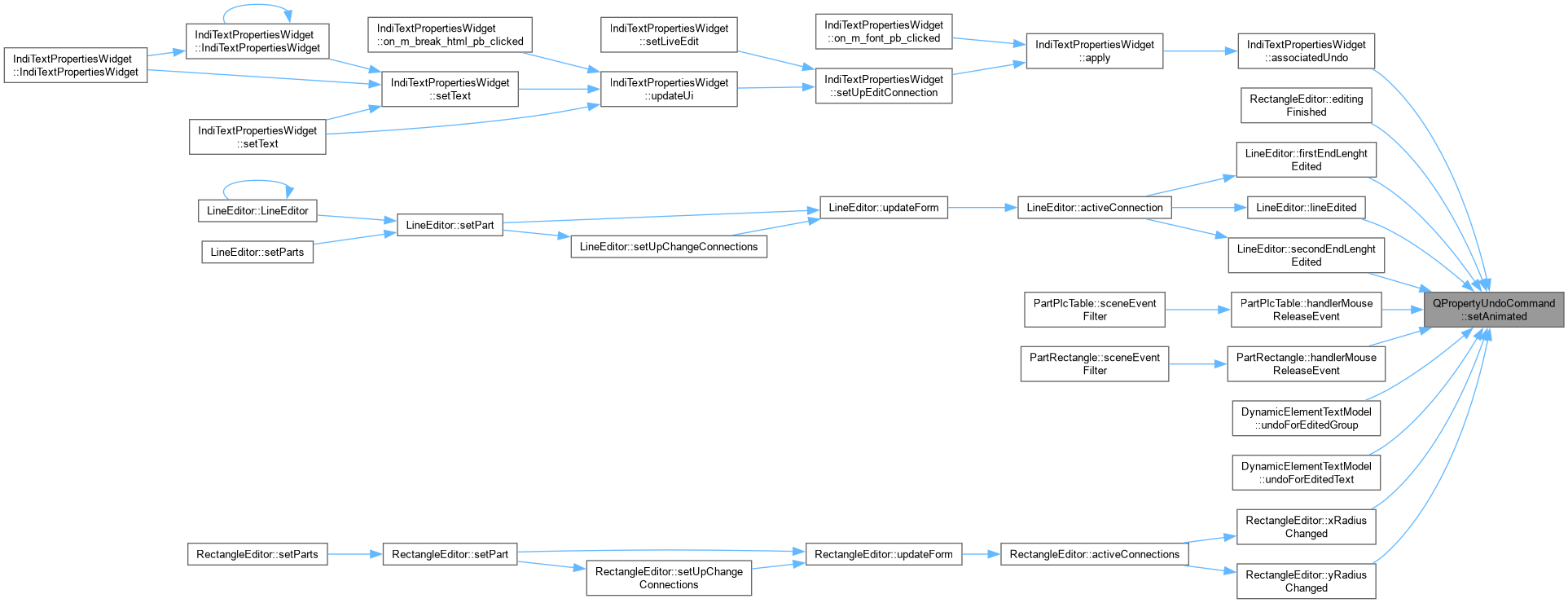
◆ setAnimated()
| void QPropertyUndoCommand::setAnimated |
( |
bool | animate = true, |
|
|
bool | first_time = true ) |
QPropertyUndoCommand::setAnimated.
- Parameters
-
| animate | = true for animate this undo |
| first_time | = if true, the first animation is done at the first call of redo if false, the first animation is done at the second call of redo. The same rule applies to undo, tracked independently: redo() always runs before the first undo() (QUndoStack::push() calls redo() immediately), so by the time undo() can run at all, redo()'s own m_first_time has already flipped true. Sharing that flag would leave undo() with no instant path ever reachable in practice – reusing it is not actually symmetric, it just looks like it is. m_undo_first_time gives undo() the same one-time grace period redo() has, on its own first call instead of redo's. |
◆ setNewValue()
| void QPropertyUndoCommand::setNewValue |
( |
const QVariant & | new_value | ) |
|
◆ undo()
| void QPropertyUndoCommand::undo |
( |
| ) |
|
|
override |
◆ m_animate
| bool QPropertyUndoCommand::m_animate = false |
|
private |
◆ m_first_time
| bool QPropertyUndoCommand::m_first_time = true |
|
private |
◆ m_new_value
| QVariant QPropertyUndoCommand::m_new_value |
|
private |
◆ m_object
| QObject* QPropertyUndoCommand::m_object = nullptr |
|
private |
◆ m_old_value
| QVariant QPropertyUndoCommand::m_old_value |
|
private |
◆ m_property_name
| const char* QPropertyUndoCommand::m_property_name |
|
private |
◆ m_undo_first_time
| bool QPropertyUndoCommand::m_undo_first_time = true |
|
private |
The documentation for this class was generated from the following files:




 1.15.0